New Delhi [India], December 11: If you want proof that the rural economic revival is real and not just policy optimism, look at the numbers. The eighth round of NABARD’s Rural Economic Conditions and Sentiments Survey confirms a broad-based rural upswing powered by purchasing power, confidence and healthier financial habits. The focus keyword here matters because the rural economic revival is no longer a theory. It’s a lived reality for millions.
NABARD has been running this high-frequency, bi-monthly survey since September 2024. With a full year’s worth of data now in hand, the trend line is unmistakable. Rural India is moving ahead, not inching. And it’s doing so with conviction.
Consumption Boom Signals Deep Rural Economic Revival
Around 80 percent of rural households consistently reported higher consumption throughout the year. That’s not a blip. That’s prosperity spreading across villages and districts.
Households now allocate 67.3 percent of their monthly income to consumption, the highest since NABARD began this exercise. GST rate rationalisation has quietly given rural families more room to spend, and they’re using it. This is demand that comes from real income strength, not festival spikes or one-off transfers. Look, when consumption is that broad and sustained, you’re looking at a genuine revival, not a headline illusion.
Income Growth Hits Record High
Here’s the kicker. Income growth is at its strongest point since the survey started. Roughly 42.2 percent of households reported higher income, while only 15.7 percent faced any decline, the lowest drop recorded to date.
Then again, the real story is the optimism. A solid 75.9 percent of rural households expect their incomes to rise next year. That’s the highest confidence India’s hinterland has shown in more than a year.
Rural India isn’t just earning more. It’s expecting more. And that kind of sentiment drives investment, entrepreneurship and long-term planning.
Capital Investments Surge as Confidence Rises
About 29.3 percent of households increased capital investment over the past year. That’s the strongest showing across all survey rounds. And it’s not a credit-fuelled scramble. Rising incomes and strong consumption are funding upgrades, whether it’s farm machinery, livestock, irrigation, or non-farm business assets.
This hints at rural households planning for the future instead of simply managing the present. You can almost feel the momentum.
Formal Credit Access at Its Highest Ever
One of the most meaningful shifts is financial. About 58.3 percent of rural households relied entirely on formal credit, banks, cooperatives, MFIs and other regulated channels. That’s a huge jump from 48.7 percent just a year ago.
Sure, informal credit still accounts for around 20 percent. But India’s push for deeper financial inclusion is clearly working. Every point of formalisation means lower costs, more transparency and more room for households to grow without debt traps.
Government Transfers Support Demand Without Dependency
Another quiet hero in this story: targeted welfare. Roughly 10 percent of average household income comes from welfare transfers, food subsidies, electricity support, water access, affordable LPG, education benefits, pensions and more.
For some households, transfers contribute over 20 percent of monthly income. Yet here’s the important part: the consumption boom and income growth clearly show that this isn’t creating dependency. It’s creating resilience. Transfers are cushioning families while the economy does the heavy lifting.
Honestly, this is where India gets it right. Smart safety nets. No-nonsense design. Real impact.
Inflation Perceptions at Their Lowest in a Year
Rural inflation perception has cooled dramatically. At 3.77 percent, it’s the first time the number has dropped below 4 percent since the survey began.
Around 84.2 percent of households think inflation is at or below 5 percent today, and nearly 90 percent expect stable, sub-5 percent inflation in the near term. Disinflation is the secret sauce of the rural economic revival. Lower inflation means more real income, more spending capacity and more confidence. That’s exactly what shows up in the data.
Loan Repayment and Investment Conditions Improve
Moderating inflation and easing interest rates have reduced the share of income going toward loan repayment. That frees households to save, invest or spend more, fuel for the revival engine.
Interestingly, the same 29.3 percent of households that stepped up capital investment also reflect improved repayment behaviour. That’s rural financial health in motion.
Infrastructure Improvements Win Rural Approval
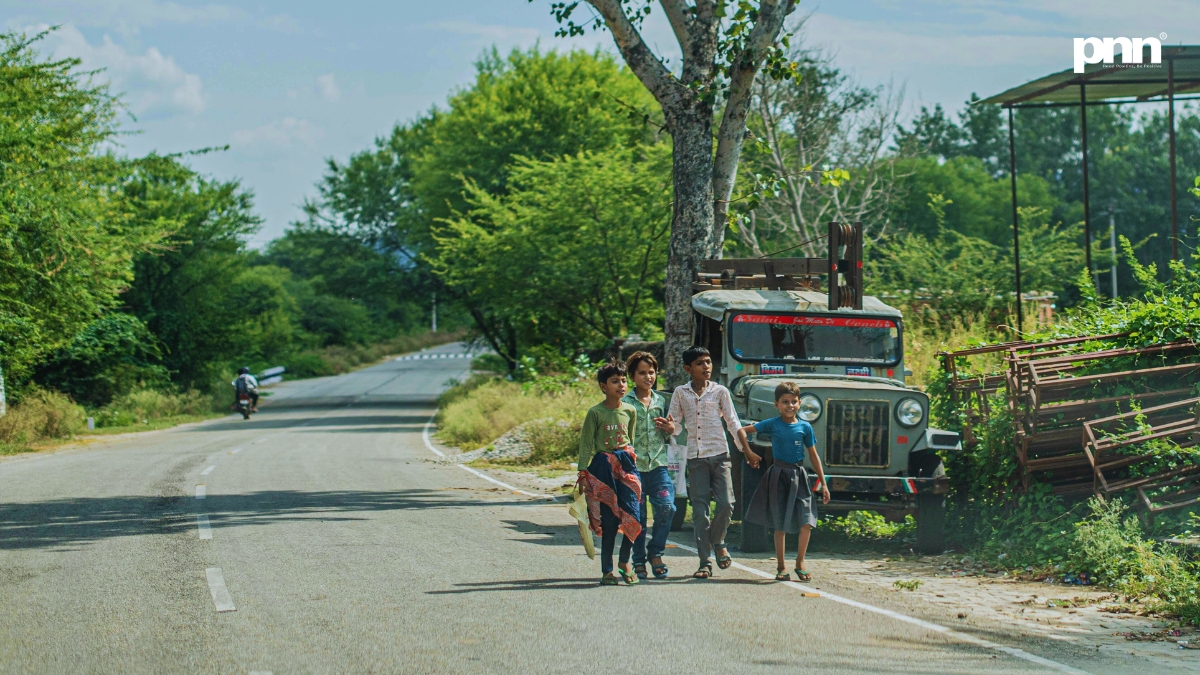
Rural households aren’t shy about what’s working. Roads, education and electricity infrastructures received particularly high satisfaction scores. Drinking water and health services followed close behind.
These aren’t small wins. Reliable infrastructure tightens supply chains, improves mobility, cuts costs and boosts productivity. And in a country as massive as India, even marginal improvements shift millions of lives.
Put simply: better roads mean faster trucks; better schools mean better futures; better electricity means businesses that don’t run on candles or guesswork.
The Big Picture: A Rural Revival With Serious Momentum
The NABARD survey leaves little room for doubt. The rural economic revival is firmly underway. Consumption is up. Incomes are rising. Inflation is cooling. Credit is formalising. Welfare is cushioning. Investments are expanding. Taken together, it makes one thing clear: rural India is no longer waiting for growth. It’s building it.